The FR Workwear Guide
The FR Workwear Guide: FR Standards, CAT Ratings, Fabrics and Care Explained
The complete, plain-English guide to flame-resistant (FR) and arc-rated (AR) workwear: what the standards actually require, what CAT ratings mean on the job, how the major FR fabrics compare, how to build a layered system, how to launder FR without ruining it, and how to read the label before you buy. Written by Rasco FR, a Baton Rouge, Louisiana FR workwear manufacturer that has been outfitting American and Canadian workers since 1988.
Key takeaways
- FR does not mean fireproof. FR clothing resists ignition and self-extinguishes once the flame or arc is gone. Its job is to keep your clothing from becoming the fuel that causes the worst burns.
- Two hazards, two standards. NFPA 70E (with ASTM F1506) covers electric arc flash. NFPA 2112 covers flash fire. Many garments are certified to both ("dual hazard"), but they measure different things.
- CAT ratings come from arc rating. PPE Category 1 = at least 4 cal/cm², CAT 2 = 8, CAT 3 = 25, CAT 4 = 40. The arc rating printed on the label (ATPV or EBT) is the number that matters.
- Layers add protection, but not by simple math. A layered system's arc rating must come from testing that combination, and anything under your FR, including underwear, must be FR or a non-melting natural fiber.
- Laundry can make or break FR. No chlorine bleach, no fabric softener, no dryer sheets, and no garments soaked with oil, grease or flammable contaminants.
- Check how it was certified. The 2027 NFPA 70E no longer accepts a supplier's own declaration by itself as proof that arc-rated PPE conforms. Look for third-party certification (such as a UL mark) or accredited-lab testing under a registered quality system.
1. What FR means (and what it doesn't)
FR stands for flame resistant. An FR fabric is one that resists igniting and, if it does catch, stops burning on its own once the source of heat is removed. That is the whole promise. It does not mean the fabric can't burn, can't char, or can't get hot enough to hurt you.
The reason FR matters is simple. In most serious arc flash and flash fire injuries, the worst burns don't come from the few seconds of the event itself. They come from ordinary clothing that catches fire and keeps burning against the skin long after the arc or fireball is gone. Cotton and polyester work shirts can burn for a minute or more. Polyester, nylon and spandex can also melt and stick to skin. FR clothing is designed to break that chain: it does not become a second fire.
FR vs. AR: flame resistant vs. arc rated
You'll see both terms. They are related but not identical:
- Flame resistant (FR) describes how a fabric behaves in a flame: it self-extinguishes and does not melt or drip. Every arc-rated fabric must be flame resistant.
- Arc rated (AR) means the fabric has also been tested against an electric arc (ASTM F1959) and given a number, the arc rating in cal/cm², that tells you how much arc energy it can block before a second-degree burn becomes likely.
So all AR clothing is FR, but not all FR clothing is AR. If you face an electrical hazard, you need a garment with an arc rating on the label, not just the letters "FR."
What FR clothing is not
- Not fireproof. FR clothing buys you seconds to escape, and it limits burn area. It does not make anyone immune to fire.
- Not protection against molten metal or sustained heat by default. Welders, foundry and smelter workers may need garments specifically tested for molten metal splash or radiant heat. A standard FR shirt is not a substitute for leathers, aluminized gear or a welding jacket where those are specified.
- Not a replacement for de-energizing. NFPA 70E is clear that establishing an electrically safe work condition comes first. PPE is the last line of defense, not the plan.
- Not permanent if you abuse it. Treated FR fabrics can lose protection if laundered with bleach or coated with softeners, and any FR garment contaminated with oil, fuel or grease can burn (see laundry).
Treated vs. inherent FR
There are two ways to make a fabric flame resistant:
- Treated FR fabrics (like FR cotton and 88/12 cotton/nylon) start as normal fibers and get a flame-resistant chemistry that bonds into the fiber. Quality treated fabrics from established mills are engineered so the FR lasts the life of the garment when it is laundered correctly.
- Inherent FR fabrics (like modacrylic, aramid, and blends such as Westex DH and DH Air or GlenGuard) are made from fibers that are flame resistant by their chemical structure. There is nothing to wash out.
Neither is automatically "safer." What matters is that the finished garment is tested and certified to the right standard and carries the arc rating your task requires. Treated and inherent fabrics differ mostly in weight, comfort, durability and price, covered in section 5.
2. NFPA 70E vs. NFPA 2112: the two standards that matter
The single most common point of confusion in FR is treating these two standards as interchangeable. They are not. NFPA 70E is about electric arc flash. NFPA 2112 is about flash fire. One tells employers how to protect workers from electrical hazards; the other tells manufacturers how FR garments must perform in a hydrocarbon fire.
| NFPA 70E + ASTM F1506 | NFPA 2112 | |
|---|---|---|
| Hazard | Electric arc flash: an explosive release of energy from an electrical fault | Flash fire: a fast-moving fire through a cloud of flammable gas, vapor or dust |
| Who it's written for | NFPA 70E: employers and electrical safety programs. ASTM F1506: fabric and garment makers | Manufacturers (garment performance). Its companion, NFPA 2113, covers selection, care and use for employers |
| Key output | An arc rating in cal/cm² (ATPV or EBT) and the matching PPE Category (CAT 1–4) | Pass/fail certification. There are no levels. A garment either meets NFPA 2112 or it doesn't |
| Main tests | ASTM D6413 vertical flame (char length ≤ 6 in., afterflame ≤ 2 s, no melt/drip, after 25 launderings); ASTM F1959 arc testing | ASTM D6413 vertical flame (char length ≤ 4 in., afterflame ≤ 2 s, before and after 100 launderings); heat transfer (ASTM F2700); thermal shrinkage ≤ 10%; heat resistance; ASTM F1930 instrumented manikin, ≤ 50% predicted body burn in a 3-second flash fire |
| Certification | Under the 2027 NFPA 70E: third-party certification, or self-declaration only under a registered quality system with accredited-lab testing | Third-party certification by an accredited certification organization (for example, UL) is required |
| Typical industries | Electrical contractors, utilities, industrial maintenance, data centers, facilities | Oil and gas drilling and production, refining, petrochemical, pipelines, some chemical and grain handling |
NFPA 70E in plain English
NFPA 70E, Standard for Electrical Safety in the Workplace, is the consensus standard OSHA looks to for electrical safe work practices. It requires employers to assess arc flash risk and, where exposure remains, to provide arc-rated clothing and PPE matched to the hazard. It does not test fabrics itself; it points to ASTM F1506 for garment performance. The current edition is the 2027 edition, issued in 2026.
Two 2027 changes matter directly to FR buyers:
- Conformity assessment got stricter. Earlier editions allowed a manufacturer to simply declare its own arc-rated PPE compliant. The 2027 edition removed that option. Arc-rated PPE must now be either certified by an accredited independent third party, or self-declared only under a registered quality management system with testing by an accredited laboratory. PPE already marked under the old method before the effective date is still permitted.
- Labels must say how conformity was assessed. The conformity assessment method has been added to the required markings, so purchasers can see it.
This is why third-party certification such as the UL mark is worth looking for on arc-rated gear.
NFPA 2112 in plain English
NFPA 2112, Standard on Flame-Resistant Clothing for Protection of Industrial Personnel Against Short-Duration Thermal Exposures from Fire, sets the minimum performance an FR garment must meet to be sold as flash-fire protection. It is a manufacturer's standard, and certification must come from an independent certification organization. The companion standard, NFPA 2113, tells employers how to assess flash fire hazards and select, care for and maintain those garments.
Where OSHA and Canadian standards fit
- OSHA 29 CFR 1910.132 requires employers to assess workplace hazards and provide appropriate PPE.
- OSHA 29 CFR 1910.269 (power generation, transmission and distribution) prohibits clothing that could melt or ignite and keep burning when workers are exposed to flames or electric arcs. Where estimated incident energy exceeds 2.0 cal/cm², it requires clothing with an arc rating at least equal to that energy.
- OSHA's 2010 oil and gas enforcement policy expects flame-resistant clothing for drilling, well servicing and production operations where a flash fire hazard exists.
- Canada: CSA Z462 (current edition Z462:24) is Canada's workplace electrical safety standard and closely parallels NFPA 70E, including the same PPE Categories. CAN/CGSB-155.20 covers workwear for protection against hydrocarbon flash fire. FR garments sold into Canadian programs are often certified to both U.S. and Canadian standards.
3. CAT ratings explained in plain English
What "cal/cm²" actually means
Arc energy is measured in calories per square centimeter (cal/cm²): how much heat energy lands on each square centimeter of your body. Bare skin starts getting a second-degree burn at about 1.2 cal/cm², which is why NFPA 70E uses that figure to define the arc flash boundary. A common way to picture 1 cal/cm² is holding your finger over a lighter flame for about one second.
ATPV vs. EBT
When a fabric is arc tested (ASTM F1959), the lab reports one of two values as its arc rating:
- ATPV (Arc Thermal Performance Value): the incident energy at which there is a 50% probability that enough heat passes through the fabric to cause the onset of a second-degree burn.
- EBT (Energy Breakopen Threshold): the incident energy at which there is a 50% probability the fabric breaks open (forms holes), letting energy straight through.
The arc rating on the label is whichever occurs first. For your purposes, treat them the same: the higher the number, the more arc energy the garment can handle.
The four PPE Categories
NFPA 70E groups arc flash protection into four PPE Categories. (Older materials say "HRC," or Hazard/Risk Category. That term was retired in the 2015 edition, along with "HRC 0.")
| PPE Category | Minimum arc rating | What that usually looks like in clothing | Example tasks from the NFPA 70E table method* |
|---|---|---|---|
| CAT 1 | 4 cal/cm² | A single lightweight AR shirt and pants, or a coverall. AR base layers often rate here | Work on panelboards rated 240 V and below (within the table's limits) |
| CAT 2 | 8 cal/cm² | Standard daily-wear FR: a 7 oz FR cotton or 88/12 shirt with FR pants or jeans, or an FR coverall. The most common category in industry | Panelboards above 240 V up to 600 V; 600 V-class motor control centers; other 600 V-class equipment |
| CAT 3 | 25 cal/cm² | Heavier layered systems or FR outerwear: insulated jackets, bibs and heavy duck, usually combined with an arc flash hood | Tasks where an arc flash study or the table calls for 25 cal/cm² |
| CAT 4 | 40 cal/cm² | Arc flash suit or heavy multilayer system with hood | 600 V-class switchgear; 600 V MCCs with slower clearing times; medium-voltage (1–15 kV) switchgear and motor starters |
*The NFPA 70E table method only applies within the fault-current, clearing-time and working-distance limits printed in the table. When your equipment is outside those limits or has an incident energy label from an arc flash study, use the incident energy on the label, not the table.
What CAT ratings mean on a real job
- A garment has an arc rating; a task has a PPE Category. A shirt rated 10 cal/cm² is suitable for CAT 2 tasks. It doesn't make you "CAT 2 compliant" by itself. Each category also requires the rest of the ensemble: face and head protection, hearing protection, gloves and footwear as listed in NFPA 70E.
- Higher is not always better. A 40 cal/cm² system is heavy, hot and restrictive. Wearing more than you need all day increases heat stress, which is its own safety hazard. Match the rating to the task, and add layers for the higher-energy tasks.
- Many programs set a daily-wear minimum. A common approach is CAT 2 (8+ cal/cm²) as everyday uniform, with CAT 3 or CAT 4 gear staged for specific tasks like switching, racking breakers or opening energized gear.
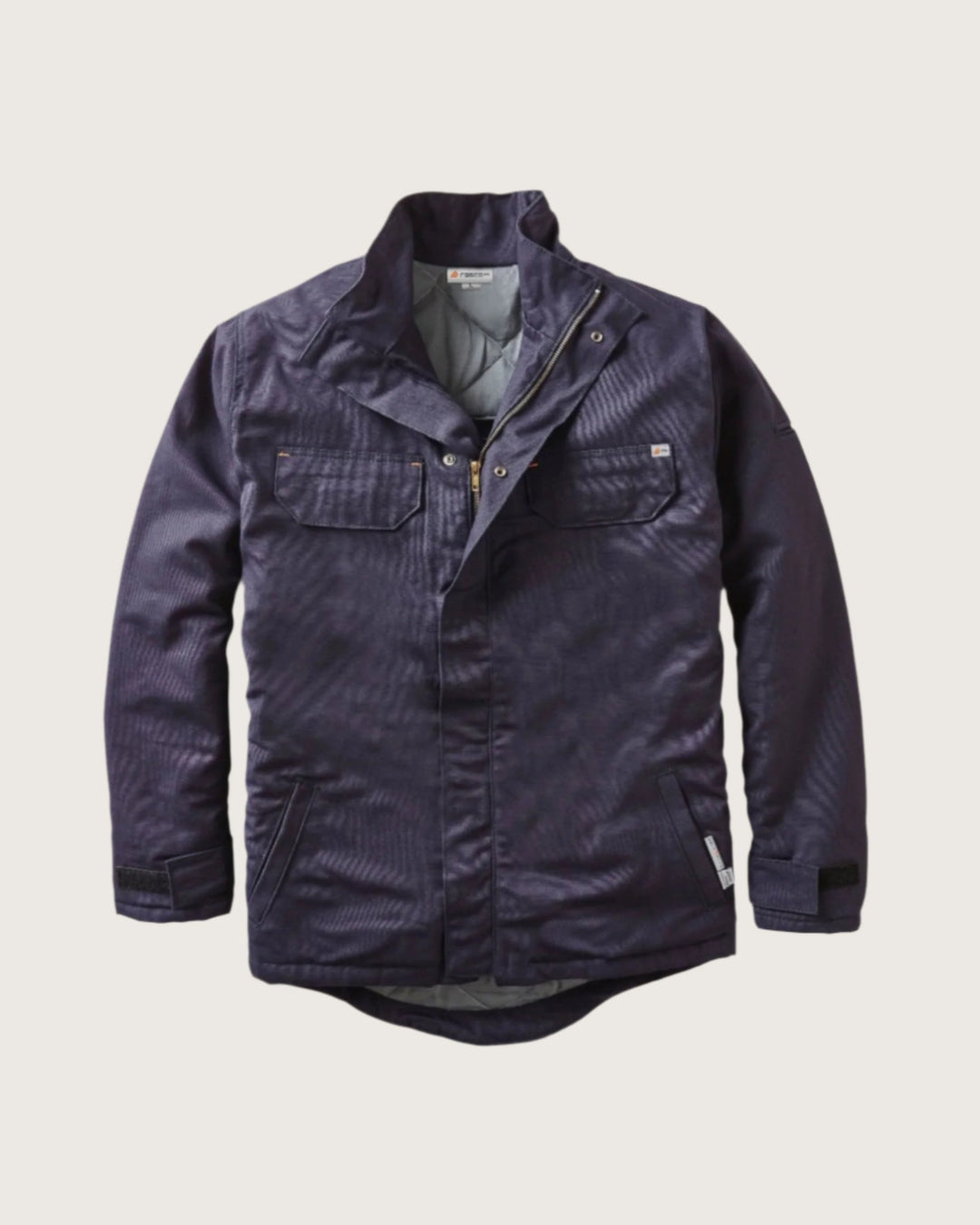
- Arc rating varies with fabric weight and fiber. The same shirt pattern in a heavier fabric earns a higher rating. For example, in Rasco's line a 7 oz 100% FR cotton knit henley rates 8.7 cal/cm² (CAT 2), an 11.5 oz FR denim jean rates 20 cal/cm² (still CAT 2, because CAT 3 starts at 25), and a canvas field jacket rates 38 cal/cm² (CAT 3).
4. Flash fire protection and NFPA 2112
A flash fire is what happens when a cloud of flammable gas, vapor or combustible dust finds an ignition source. It burns through the cloud in a few seconds at very high temperatures and then it's over, unless your clothing is still burning. That is the whole design target of NFPA 2112: short-duration exposure, then escape.
What an NFPA 2112 garment has to prove:
- Flame resistance: char length of 4 inches or less and afterflame of 2 seconds or less in the vertical flame test (ASTM D6413), with no melting or dripping, both new and after 100 launderings. That's stricter than the 6-inch limit in ASTM F1506.
- Heat transfer performance (ASTM F2700): minimum values for both a spaced configuration (fabric not touching skin, 6.0 cal/cm²) and a contact configuration (3.0 cal/cm²).
- Heat resistance and thermal shrinkage: no melting, dripping, separation or ignition in a hot-air oven, and no more than 10% shrinkage.
- Manikin test (ASTM F1930): a full-size instrumented manikin wearing the garment is engulfed in a 3-second flash fire. Predicted second- and third-degree body burn must be 50% or less.
- Thread and hardware: sewing thread must withstand high heat, and labels must stay legible after 100 launderings.
Important: NFPA 2112 has no levels or categories. A garment certified to NFPA 2112 has met the requirement. If someone quotes you an "NFPA 2112 CAT 2 shirt," those are two separate facts, a flash fire certification and an arc rating, and both should be on the label.
5. FR fabric types compared honestly
Every FR fabric is a trade-off between protection per ounce, comfort, durability and price. Here's how the major families compare, including where each one falls short.
| Fabric | Type | Strengths | Trade-offs | Best for |
|---|---|---|---|---|
| 100% FR cotton (twill, knit, duck, denim) | Treated | Familiar feel, breathable, soft after washing, lowest cost per garment, excellent value for CAT 2 | Heavier for a given arc rating; can shrink; less abrasion resistance than blends; needs correct laundering | Daily-wear shirts, henleys, jeans, coveralls, heavy duck outerwear |
| 88/12 (88% cotton / 12% nylon) | Treated | The nylon adds strength and abrasion resistance, better shape retention, and handles industrial laundering well. Westex UltraSoft is the best-known example | Slightly less breathable than pure cotton; costs a little more | Uniform programs, industrial laundry rentals, utility and plant work |
| Modacrylic blends | Inherent | Soft, lightweight, good moisture handling, FR can't wash out. The go-to fiber for FR base layers and knits | Lower arc rating at light weights; can pill; costs more than cotton | Base layers, T-shirts, knit tops, blended into many inherent fabrics |
| Aramid blends (meta-aramid and similar; for example GlenGuard) | Inherent | Very lightweight, strong, durable, colorfast (often solution-dyed), excellent flash fire performance | Highest cost; lower arc rating per ounce than some modacrylic/lyocell blends; can feel stiffer | Refinery and petrochemical coveralls, food processing, programs that prioritize light weight and color retention |
| Lyocell / modacrylic / aramid blends (for example Westex DH and DH Air) | Inherent | Dual hazard (arc + flash fire) at light weights; DH Air is built for breathability and moisture management; no washing out of FR | Premium price; lighter fabrics give up some abrasion resistance compared with heavy cotton | Hot climates, all-day wear, uniform and coverall programs |
| FR fleece and insulated fabrics | Treated or inherent | Warmth, and layering boosts total system arc rating | Bulk; must be FR throughout, including shell, insulation and lining | Hoodies, jackets, winter liners, bibs |
Honest notes on fabric choice
- Treated cotton is not "second-class" FR. Properly certified FR cotton and 88/12 protect workers every day across the utility, oil and gas, and industrial sectors. It is heavier for a given rating and needs to be laundered correctly. That's the real trade-off.
- Inherent fabrics win on weight and comfort, and cost more. If your crews work outdoors in Gulf Coast heat, lighter inherent fabrics can reduce heat stress enough to justify the price.
- Stretch has to come from FR fibers. Standard spandex is not flame resistant. FR stretch fabrics use specially engineered FR elastic fibers or blends, and the finished fabric must still be certified.
- Weight matters as much as fiber. Compare arc ratings, not fiber names. A 5 oz modacrylic base layer and a 7 oz cotton henley aren't trying to do the same job.
6. How to build a complete FR system by layer
A good FR program thinks in systems, not individual garments. Here's how to build one from the skin out.
- Base layer (next to skin). FR or non-melting natural fiber only: cotton, wool, silk, or an FR modacrylic blend. No polyester, nylon, polypropylene or spandex underwear or undershirts. NFPA 70E prohibits meltable fibers in layers under AR clothing, except for incidental amounts of elastic. An FR base layer adds its own arc rating to the system and helps with moisture control.
- Daily-wear layer. Your FR shirt, henley or coverall plus FR pants or jeans, typically CAT 2 (8+ cal/cm²). This is what you wear all day.
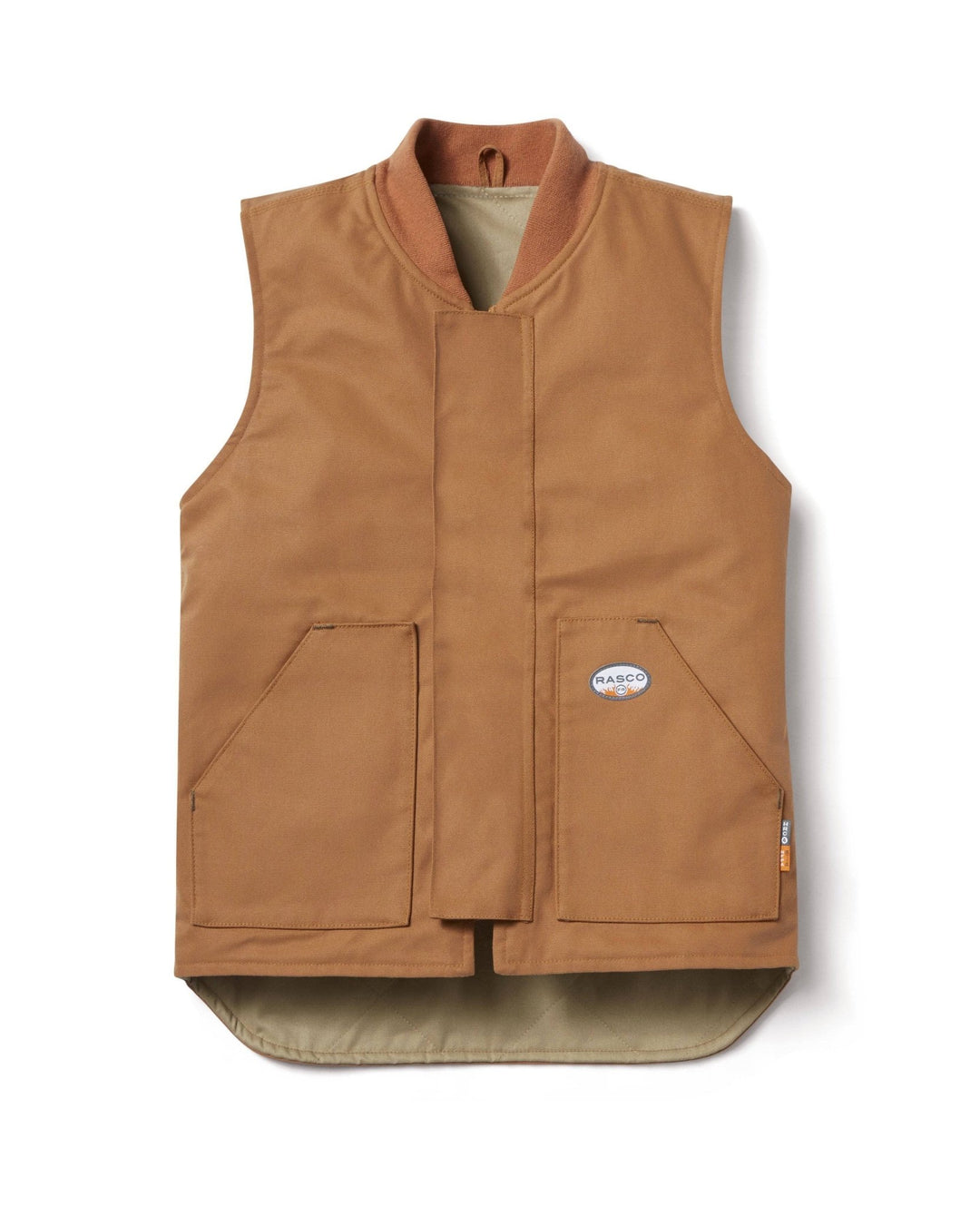
- Mid layer (as needed). FR hoodie, sweatshirt or insulated vest for warmth. A mid layer adds meaningful arc rating to the system.
- Outer layer. FR jacket, bib overall or coverall for weather, abrasion and higher-energy tasks. Anything worn over FR clothing must also be FR/AR, including rain gear, hi-vis vests, winter coats and hoodies. A standard polyester rain jacket over an FR shirt can melt and ignite.
- Extremities and face. Depending on the task: arc-rated balaclava or hood, face shield, leather or AR gloves, and leather footwear. For higher PPE Categories, the hood and face protection are what usually drive the ensemble.
The layering math: why you can't just add numbers
Layering FR garments creates air gaps that insulate, so a tested two-layer system very often rates higher than the two individual ratings added together. But it can also come out differently, and NFPA 70E only permits a multilayer rating if the combination itself has been tested. So a 6 cal/cm² base layer under an 8.7 cal/cm² shirt is not automatically 14.7 cal/cm². Ask the manufacturer for tested system ratings, or use a single outer garment that meets the requirement on its own.
Hi-vis and FR together
Standard hi-vis vests are usually polyester, and polyester melts. If you need both visibility and FR, use a garment that meets ANSI/ISEA 107 for visibility and carries its own FR/arc rating, including the reflective tape.
Winter layering
Cold-weather FR works the same way: FR base layer, CAT 2 daily wear, FR fleece or insulated mid layer, FR insulated jacket or bib, plus an FR winter liner or balaclava under the hard hat. Every layer, including insulation and linings, must be FR. That's what keeps a warm crew from becoming a flammable one.
7. Washing FR clothing: home and industrial laundry
Improper laundering is one of the most common ways good FR clothing gets compromised. The rules are simple, and they apply whether you wash at home or use an industrial service.
Do
- Follow the care label. It's part of the garment's certification
- Wash FR separately from regular clothes to avoid lint from flammable fibers
- Turn garments inside out to reduce fading and abrasion
- Use regular detergent; soft water helps
- Remove flammable contaminants (oil, grease, fuel, solvents) completely. Pre-treat or send to industrial laundry
- Tumble dry at the temperature on the label and remove promptly to limit shrinkage
- Inspect before every shift
Don't
- Use chlorine bleach, which can damage treated FR and weaken fibers
- Use liquid fabric softener or dryer sheets, which leave a flammable coating on the fabric
- Use starch or spray sizing
- Use hydrogen peroxide or "oxygen" boosters on treated FR cotton unless the manufacturer approves it
- Wear a garment that's soaked with oil, fuel or grease; the contaminant can ignite even if the fabric won't
- Patch with non-FR fabric or thread
Industrial laundry considerations
Many companies use industrial rental or laundry services for FR uniforms. That works well, but it has its own rules:
- Use a launderer that knows FR. Industrial laundering of FR garments is addressed by ASTM F1449 (home laundering by ASTM F2757). Ask your provider how they handle FR: wash chemistry, water hardness, bleach-free processes and drying temperatures.
- Hard water can hurt FR. Mineral deposits from hard water can build up on fabric and mask FR properties. Industrial processes should use softened water.
- Choose fabrics that hold up. 88/12 and many inherent blends are popular in rental programs because they tolerate high-temperature industrial wash cycles and keep their shape.
- Track garment life. Industrial programs should retire garments based on condition, not just age.
When to retire an FR garment
- Holes, tears or worn-through areas that you can't repair with FR materials
- Fabric worn so thin you can see through it
- Contamination that won't wash out
- Label no longer legible, so you can't verify the rating
- Any garment that has been through an actual arc flash or fire event
8. Common FR program requirements by industry
Requirements depend on your employer's hazard assessment. The patterns below are typical starting points, not a substitute for your site's own program.
| Industry | Primary hazard | Standards usually referenced | Typical daily-wear requirement |
|---|---|---|---|
| Electrical contractors and industrial electricians | Arc flash | NFPA 70E, ASTM F1506, OSHA 1910.132 / 1910.335; CSA Z462 in Canada | CAT 2 AR daily wear, with CAT 3–4 gear for specific energized tasks |
| Utilities and linemen | Arc flash, plus weather | OSHA 1910.269, NFPA 70E, ASTM F1506 | AR clothing rated at or above the estimated incident energy (often 8–12+ cal/cm² daily), AR rain gear and hi-vis |
| Oil and gas drilling, production and pipelines | Flash fire | NFPA 2112, NFPA 2113, OSHA 2010 oil and gas FRC policy; CGSB 155.20 in Canada | NFPA 2112-certified shirts, pants or coveralls; many operators also require an arc rating for dual hazard |
| Refining and petrochemical | Flash fire and arc flash | NFPA 2112, NFPA 70E, ASTM F1506 | Dual-hazard coveralls or shirt/pant sets, often CAT 2 minimum |
| Welding and fabrication | Sparks, spatter, ignition of clothing | ANSI Z49.1 (safety in welding); FR often specified by site programs | FR shirts and jeans to prevent clothing ignition, plus welding caps; leathers for heavy spatter |
| Construction | Varies: electrical, hot work, flash fire on industrial sites | Site-specific; follows the host facility's program | FR required when working in plants, refineries or near energized equipment; FR hi-vis where both are needed |
| Manufacturing and plant maintenance | Arc flash during electrical work; combustible dust in some plants | NFPA 70E, OSHA 1910.132; NFPA 652/654 context for dust | CAT 2 AR for maintenance electricians; FR for combustible dust areas per assessment |
| Food processing | Flash fire (fryers, ovens, dust), arc flash in maintenance | Site hazard assessment, NFPA 2112 / 70E as applicable | Lightweight FR shirts, lab coats and smocks; often color-coded and laundered industrially |
For safety managers: put your required standard and minimum arc rating in writing, specify whether employee-owned FR is allowed, define who launders and how, and set a replacement policy. That's what turns a clothing allowance into a compliant FR program.
9. How to read an FR label
An FR garment's label is its proof of protection. If you can't read it, you can't verify it. Here's what to look for on arc-rated and flash-fire garments.
Example FR label (illustrative)
- Standards met: "Meets ASTM F1506 / NFPA 70E" and/or "Certified to NFPA 2112"
- Arc rating: "ATPV 8.7 cal/cm²" or "EBT xx cal/cm²"
- PPE Category: "CAT 2" (shown on many labels, derived from the arc rating)
- Certification mark: third-party mark (for example, UL) for NFPA 2112 and certified arc-rated garments
- Conformity assessment method (newly required marking under the 2027 NFPA 70E)
- Fiber content and fabric: "88% cotton / 12% nylon, 7 oz"
- Manufacturer and tracking/lot code
- Size and care instructions
Label red flags
- "FR" with no standard and no number. Flame resistant to what? Without a standard and an arc rating, you can't use it for electrical work.
- "Meets NFPA 70E" with no arc rating. NFPA 70E doesn't certify garments. The arc rating is what counts.
- "NFPA 2112 compliant" with no certification mark. NFPA 2112 requires third-party certification. Look for the certifier's mark.
- Missing or faded label. If it's gone, the garment can't be verified and shouldn't be relied on in a program that requires documentation.
- Old "HRC" language. Not a problem by itself, but it suggests older stock. Confirm the arc rating.
10. How to choose the right FR garment: 5 steps
- Identify the hazard. Arc flash, flash fire, or both? Your employer's hazard assessment or arc flash study should tell you.
- Find the required number. For arc flash, use the incident energy on the equipment label or the PPE Category from the NFPA 70E table. For flash fire, the requirement is NFPA 2112 certification.
- Pick garments that meet it on the label. Arc rating ≥ required incident energy; NFPA 2112 certification if flash fire applies. Prefer third-party certified gear.
- Choose the fabric for your conditions. Heat, humidity, abrasion, laundering method, budget and how long the shift is.
- Build the system and maintain it. FR or natural-fiber base layers, FR outerwear, correct laundering, and retire worn garments.
11. FR workwear FAQ
What's the difference between FR and fire retardant?
"Fire retardant" is an older, looser term. In workwear, the correct term is flame resistant (FR), meaning fabric that resists ignition and self-extinguishes, tested to recognized standards like ASTM F1506 or NFPA 2112.
Is NFPA 2112 clothing good enough for arc flash?
Only if it also carries an arc rating that meets your requirement. NFPA 2112 is a flash fire standard and does not assign an arc rating. Many garments are certified to both, so check the label for an ATPV or EBT value.
What does CAT 2 mean on FR clothing?
It means the garment has an arc rating of at least 8 cal/cm², matching NFPA 70E PPE Category 2. It's the most common daily-wear level for electrical and industrial workers.
Can I wear a regular T-shirt under FR clothing?
A 100% cotton T-shirt is generally acceptable as an underlayer. Polyester, nylon, spandex or blended athletic shirts are not, because they can melt onto skin. An FR base layer is the best option because it adds to your protection.
Does FR clothing lose its protection after washing?
Inherent FR fabrics can't lose it. Quality treated FR fabrics are designed to keep FR properties for the life of the garment when laundered correctly: no bleach, no fabric softener, and contaminants removed. Improper laundering and heavy contamination are what compromise FR.
Are FR jeans really FR?
Yes, if they are made from FR denim and certified. FR jeans are typically 100% FR-treated cotton or FR stretch denim and commonly carry CAT 2 arc ratings, with heavier weights rating higher. Regular jeans are not FR.
How long does FR clothing last?
It depends on wear and laundering more than on age. Retire garments with holes, thin spots, contamination that won't wash out, or an unreadable label, and any garment exposed to an actual arc or fire.
Do I need FR clothing for welding?
Welding sparks and spatter ignite ordinary clothing, especially synthetics. Many welders wear FR shirts, jeans and welding caps to reduce that risk, and many site programs require it. Heavy spatter and overhead work may also call for leather protection.
Is FR clothing required by OSHA?
OSHA requires employers to assess hazards and provide appropriate PPE (1910.132). For power generation, transmission and distribution, 1910.269 specifically prohibits meltable or flammable clothing and requires arc-rated clothing where incident energy exceeds 2.0 cal/cm². OSHA also enforces FR clothing in oil and gas operations with a flash fire hazard.
What does "dual hazard" mean?
A dual-hazard garment is certified for both arc flash (with an arc rating under ASTM F1506 / NFPA 70E) and flash fire (NFPA 2112). It's common in refining, petrochemical and utility work where both hazards exist.
About this guide
This guide is maintained by Rasco FR, a family-owned FR workwear manufacturer founded in Baton Rouge, Louisiana in 1988. Rasco's FR garments are built to ASTM F1506 / NFPA 70E, and much of the line is certified to NFPA 2112 by UL. We wrote it to be useful whether or not you buy from us: the standards are the standards.
Important: This guide is general educational information, not a substitute for your employer's hazard assessment, arc flash study, or the current published standards. Always follow your site's safety program and the garment manufacturer's labeling and care instructions. Standards referenced: NFPA 70E (2027 ed.), NFPA 2112 (2023 ed.), NFPA 2113, ASTM F1506, ASTM F1959, ASTM D6413, ASTM F1930, ASTM F2700, ASTM F1449, ASTM F2757, OSHA 29 CFR 1910.132 and 1910.269, CSA Z462:24, CAN/CGSB-155.20, ANSI/ISEA 107, ANSI Z49.1.
Questions about FR requirements for your crew or program? Call Rasco at 225-273-3163 or contact us. Or shop by protection level below.