

Thanksgiving is the number one day of the year for home cooking fires. And the risk doesn't stop there. Next come the Christmas lights, the colder nights, and the first fire of the season in the fireplace. Here are the biggest flash fire and arc flash risks of the holiday stretch, what actually causes them, and what to wear when you're the one standing closest.
Every family has a designated holiday hazard guy. He fries the bird. He hangs the lights. He gets the fire pit going when the in-laws start shivering. He has never once read the instructions.
We make flame resistant workwear for people who stand next to fire and electricity for a living. So this one's for him. (And for whoever has to drive him to the burn unit if this goes sideways.)
Here are the four big ones.
1. The turkey fryer fireball

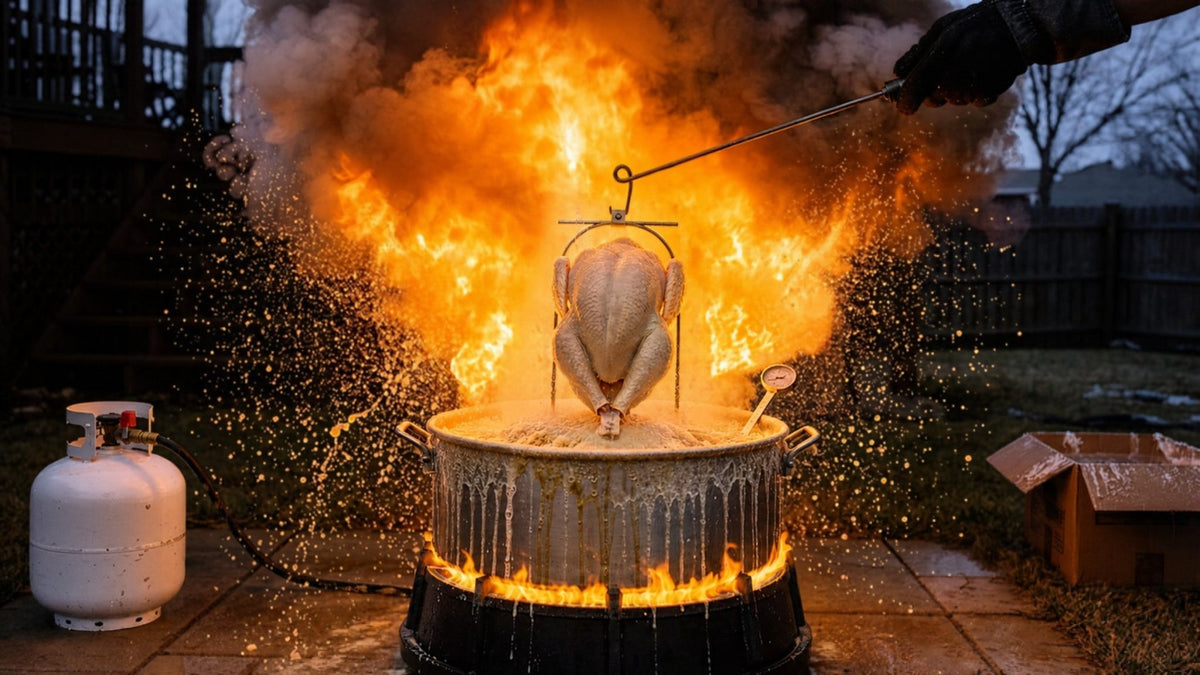
Down here in Louisiana, fried turkey isn't a trend. It's a tradition. So is the fireball.
Here's the science. A turkey fryer holds a few gallons of oil heated to around 350°F. Drop in a bird that's still partly frozen or wet, and that water hits the oil and flashes to steam instantly, expanding hundreds of times over. The steam shoves hot oil up and over the rim, right onto the open propane flame underneath. Oil meets flame, and you've got a flash fire with a person standing three feet away holding a hook.
Fun fact: we get our NFPA 2112 garments UL certified. UL, the same lab, has flatly said it won't put its mark on any turkey fryer. Their testing found the fryers tip easily, the pot and handles get dangerously hot, and many units have no thermostat to stop the oil from overheating until it ignites on its own.
How to not end up on the news:
- Thaw it all the way and pat it dry. Inside the cavity too. Ice is the enemy.
- Do the water test first. Put the bird in the empty pot, fill with water to cover it, pull the bird out and mark the line. That's your oil level. Overfilling is how most spillovers start.
- Outside, on flat ground, away from the house. Never on a wooden deck, in a garage or under a patio cover.
- Kill the burner, then lower the bird. Slowly. Relight once it's in.
- Never use water on a grease fire. Have a fire extinguisher rated for grease fires within reach, and if it gets away from you, back off and call 911.
What to wear: A boil-over is a textbook flash fire, a short burst of intense flame and heat. That's exactly the hazard NFPA 2112 garments are built and tested for. A polyester hoodie or fleece can catch, melt and stick to your skin. Flame resistant fabric won't keep burning once the flame source is gone, and it won't melt or drip. Wear long sleeves, cover your arms and legs, and add heat-resistant gloves and eye or face protection, because FR clothing stops flames from spreading, not splashes of 350°F oil.


Bonus points: slap a “Don't Try This in Polyester” sticker on the propane tank. It's advice.
2. The kitchen circuit pileup

Thanksgiving is the one day a year your kitchen tries to run like a restaurant on house wiring. The oven's full, so out come the electric roaster, two slow cookers, the air fryer, the stand mixer, the warming trays and the coffee maker for the pie crowd. Half of them end up on one counter, on one power strip, on one circuit.
Here's the math. A typical 15-amp, 120-volt kitchen circuit tops out around 1,800 watts, and it's meant to carry less than that for long stretches. A single roaster or air fryer can pull 1,200 to 1,500 watts by itself. Add a slow cooker and you're over.
When the breaker trips, it's doing its job. The danger is everything else: daisy-chained power strips, cheap extension cords, worn plugs and loose outlets that heat up and start arcing. The Electrical Safety Foundation International (ESFI) reports that U.S. home fires tied to electrical failure run in the tens of thousands every year, and arcing faults are a major cause.
How to keep the lights on:
- Spread the load. Put the heat-makers (roasters, slow cookers, air fryers) on different circuits. The dining room and laundry room have outlets too.
- Plug cooking appliances straight into the wall. Power strips and light-duty extension cords aren't made for that kind of draw.
- Feel for warm cords and outlets. Warm plugs, a burning smell, scorch marks or buzzing mean unplug it now.
- Never “fix” a tripping breaker with a bigger breaker. That's how a nuisance becomes a house fire.
What to wear: Nobody's suiting up in FR to baste a turkey. But the family member who heads to the garage to “take a look at the panel” with the cover off is exactly who should. Arcing inside an energized panel can flash, even at house voltage, and if you do electrical work for a living, you already know NFPA 70E. If you don't, call an electrician. (More on panels below.)
3. The Griswold: hanging Christmas lights

The turkey's gone, the game's over, and somebody says, “Let's get the lights up while everybody's here.” Which is how a lot of folks end up living out their own Christmas Vacation: 25,000 bulbs, a single outlet and a mountain of extension cords plugged into each other like a Jenga tower.
Clark Griswold played it for laughs. The real version isn't as funny. ESFI says electrical decorations cause about a quarter of holiday fires, and NFPA data shows electrical problems are involved in roughly one in three home Christmas tree fires.
Where's the arc flash? Overloaded outlets and cord connections heat up until they arc. Damaged or pinched cords short out. Outdoor connections get wet. And the real flash risk shows up when somebody gets impatient with a tripped breaker and starts working inside the panel with it live.
How to deck the halls without decking yourself:
- Inspect before you hang. Cracked sockets, frayed wire or loose connections go in the trash, not on the gutters.
- Follow the connection limit. ESFI's rule of thumb is no more than three strings of incandescent lights end to end. LEDs can go further, but check the package.
- Outdoor lights on GFCI outlets, outdoor-rated cords only. Water and electricity don't mix, and indoor lights don't belong outside.
- Use lights tested by a recognized lab (look for the mark on the box) and put them on a timer so they're off when you're asleep or gone.
- Watch the ladder. Use a wood or fiberglass ladder and keep at least 10 feet between you and any overhead power line.
- Leave the panel to the pros. If something keeps tripping, unplug and redistribute. Don't open up the panel.
What to wear: If you work around energized equipment for a living, holiday lighting gigs included, arc-rated gear is the job. Layer it right: an FR base layer next to your skin (a polyester undershirt can melt under arc-rated outerwear), an FR shirt or bib on top, and FR headwear for those cold rooftop hours.


Gasoline is for engines. Not for “helping” the fire along.
4. The first fire of the season

It's the first cold night. The fireplace, fire pit or burn barrel hasn't been touched since March. The wood's a little damp, the guests are a little cold, and somebody walks out of the garage with a gas can.
This is the most preventable flash fire of the holiday season, and it puts thousands of people in the ER. A few numbers worth knowing:
- The American Burn Association has put gasoline fires at roughly 500 deaths and more than 10,000 ER visits a year, and NFPA compares a gallon of gas to 20 sticks of dynamite.
- CPSC counted more than 5,000 ER visits for fire pit burns in 2017 alone, nearly triple the number from 2008.
- The ATF has documented “flame jetting”: pour gasoline toward a flame and the vapor trail can ignite and travel back to the can, firing burning fuel out like a flamethrower, as far as six feet.
The vapor is the problem. Gasoline gives off flammable vapor that rolls along the ground and finds the flame before you're ready. Splash it on hot coals or a smoldering log and you don't get a nice fire. You get a fireball, and it's aimed at whoever's holding the can.
Gas fireplaces have their own version. If the pilot or burner doesn't light right away and gas keeps flowing, it builds up in the firebox until it ignites with a whoomp. Same goes for lighter fluid squirted onto a fire that's already going.
How to light it without lighting yourself:
- Never use gasoline. Ever. Not to start a fire, and especially not to “help” one that's already burning.
- Use dry, seasoned wood and real fire starters. Kindling, newspaper, fire starter cubes.
- Lighter fluid goes on before the match, never after.
- Open the flue and get the chimney inspected before the first fire of the year.
- Gas fireplace won't light? Shut it off, let the gas clear out and follow the manufacturer's relight steps. If it keeps happening, call a technician.
- Keep the fire pit at least 10 feet from the house and keep the gas can, and the guy who's had a few, well away from it.
What to wear: This is where your clothes matter most, because a fire pit flare-up is a flash fire at close range. Fleece and synthetic hoodies are made from plastic. In a flash fire they can ignite, melt and stick. An FR hoodie won't continue burning once the flame is gone, and it won't melt onto you. And if you work around flash fire hazards anyway, you probably already own one.


What FR can (and can't) do for you
Let's be straight, because that's how we do it. Flame resistant clothing is not fireproof, and it's not a permission slip.
- What it does: It resists igniting, stops burning once the flame source is gone, and won't melt or drip onto your skin. That buys you the seconds you need to get away, and it can be the difference between a bad story and a bad burn.
- What it doesn't do: It won't stop electrical shock. It won't stop a splash of 350°F oil from scalding you. It won't protect skin it isn't covering. And it won't fix bad decisions with a gas can.
The best fire is the one that never starts. Your FR is for the one you didn't see coming.
The holiday fire guy's checklist
Screenshot it and stick it on the fridge next to the dinner schedule.
- ☐ Turkey fully thawed and patted dry
- ☐ Oil level set with the water test
- ☐ Fryer outside, on flat ground, away from the house and off the deck
- ☐ Grease-rated fire extinguisher within reach (and no water on grease, ever)
- ☐ Cooking appliances spread across circuits and plugged straight into the wall
- ☐ Light strings inspected, outdoor-rated and on GFCI outlets
- ☐ Ladder at least 10 feet from power lines
- ☐ Breaker panel left closed
- ☐ Flue open, chimney checked
- ☐ Gas can locked in the garage
- ☐ Long sleeves on, and no polyester near the fire
Miss one and it's time to rethink the plan.
Gear up the family fire guy
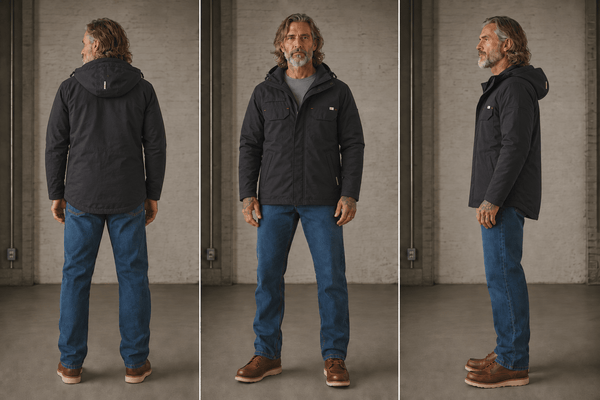
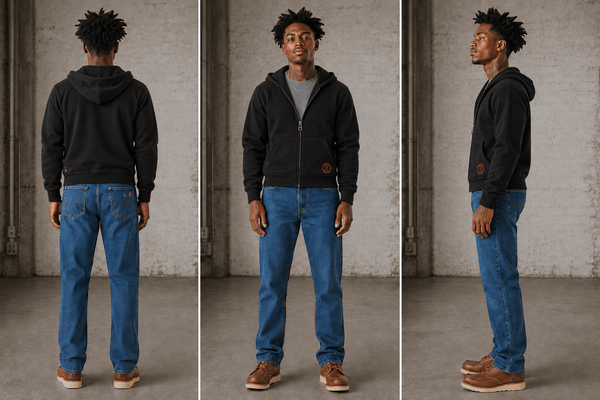
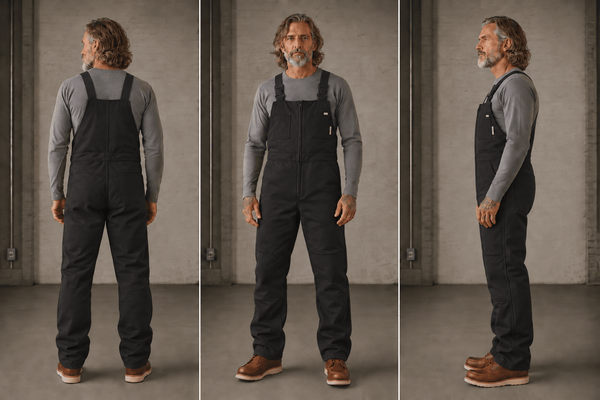
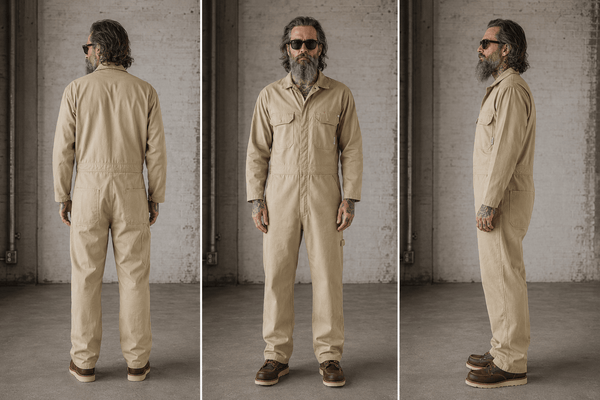
Every family has one. Get him (or her) something that'll still be around next Thanksgiving. Rasco has been making flame resistant workwear in Baton Rouge since 1988. Our NFPA 2112 garments are UL certified, and our FR meets ASTM F1506 and NFPA 70E. Mix any 3 pieces from the Core Collection and save 10%. Not sure about sizes? A Rasco FR Gift Card lets them pick.

22 cal/cm² · CAT 2 · $114

38 cal/cm² · CAT 3 · $198

8.7 cal/cm² · CAT 2 · from $65

38 cal/cm² · CAT 3 · $234
Shop by category: Jackets & Hoodies · FR Shirts · Coveralls & Bibs · FR Base Layers · Women's · Big & Tall
Already own FR that's been through a few holidays? Read When to Replace FR Clothing: 10 Signs Your Gear Is Done.
Quick answers
What day has the most home cooking fires?
Thanksgiving, by a wide margin, according to NFPA. Christmas Day and Christmas Eve come next.
Why do turkey fryers explode?
Water or ice on the turkey flashes to steam in hot oil, forcing oil over the rim onto the burner flame. Overfilled pots and lowering the bird too fast make it worse.
Will FR clothing protect me from hot oil?
FR clothing protects against flash fire: it won't keep burning or melt. It does not stop scalds from hot oil splashes, so add heat-resistant gloves and face protection.
Can Christmas lights cause an arc flash?
Overloaded outlets, damaged cords and wet connections can arc and start fires. Working inside an energized breaker panel is where arc flash risk gets serious. Leave that to a qualified electrician.
Is it ever OK to use gasoline to start a fire?
No. Gasoline vapor can ignite before you're ready and flash back toward the can.
Why not just wear a fleece by the fire pit?
Most fleece is synthetic. In a flash fire it can ignite, melt and stick to your skin. FR fabric won't melt or drip.
Questions about FR? See our FR Workwear FAQ and The FR Workwear Guide, or call us at 225-273-3163. Happy Thanksgiving from all of us at Rasco FR. Keep your eyebrows.



Leave a comment